
Introduction
Hydroxyethylidene Diphosphonic Acid (HEDP) is an organophosphorus compound commonly used as a chelating agent, scale inhibitor, and in various industrial applications, including water treatment and detergent formulations. Here are the details related to its production:
Production Method
HEDP can be synthesized through several methods; the most common process involves the condensation of phosphorous acid with specific starting materials:
1.Starting Materials:
- Phosphorous trichloride (PCl3)
- Acetic acid or its derivatives (e.g., acetylene or acetaldehyde)

2.Process Steps:
- Phosphorylation:
- Phosphorous trichloride reacts with acetic acid to form an intermediate product.
- Phosphorylation:

3.Hydrolysis and Esterification:
- The intermediate product undergoes hydrolysis and esterification reactions to yield HEDP.

4.Purification:
- The product mixture may need purification through distillation or crystallization to isolate HEDP.
The provided scheme is a kind of production method of hydroxyethylene diphosphonic acid, it is characterized in the following steps,
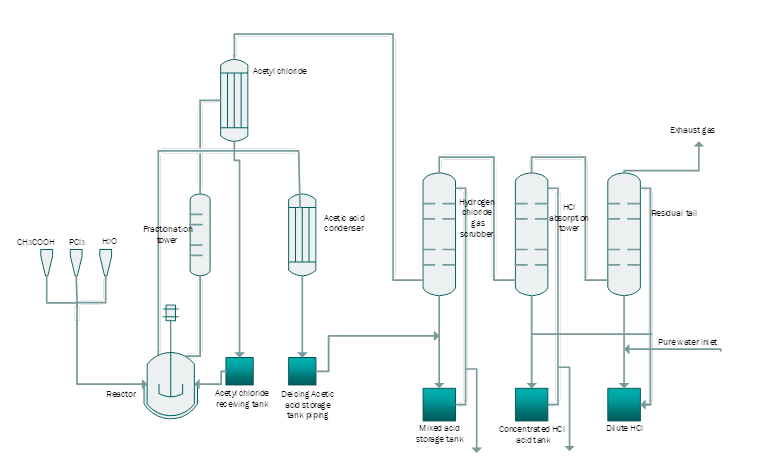
Add acetic acid -water solution into the reaction kettle, start stirring, pass cooling water through the interlayer, slowly add phosphorus trichloride at room temperature, control the adding speed, and keep the inner temperature between 20-45°C,
After adding phosphorus trichloride, stir and heat up to 45-65°C,
Keep the phosphorus trichloride in the reflux state, and keep it warm for 3 hours.
The acetyl chloride and hydrogen chloride gas generated during the reaction pass through the fractional distillation condenser, condense the acetyl chloride and return it to the reactor, the hydrogen chloride gas is washed by the acetic acid-hydrochloric acid mixture, and after the residual acetyl chloride is removed, it undergoes multi-stage absorption to obtain concentrated hydrochloric.
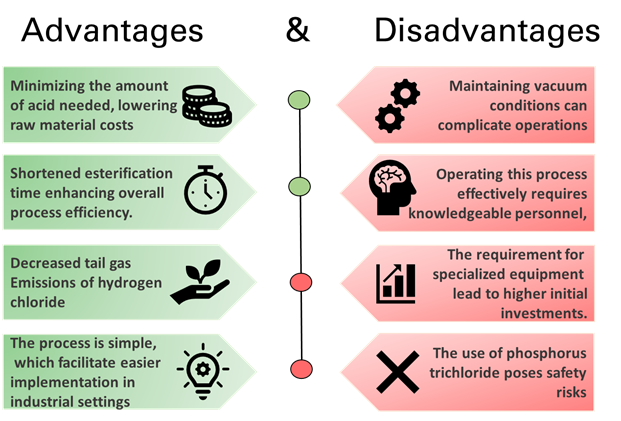
In summary, the proposed production process is characterized by its simplicity and high yield, ensuring product quality conforms to industry standards while achieving a high level of purity. The innovations presented herein contribute to both economic efficiency and environmental sustainability within the chemical manufacturing domain.